
Best Physiotherapy Care
Restore your lifestyle
What is Physiotherapy?
Physiotherapy is the practice of improving your quality of life by promoting optimal mobility and overall health and well-being. It can also help to prevent illness and disease, manage acute and chronic conditions, and help you to rehabilitate from injury or the effects of disease or disability

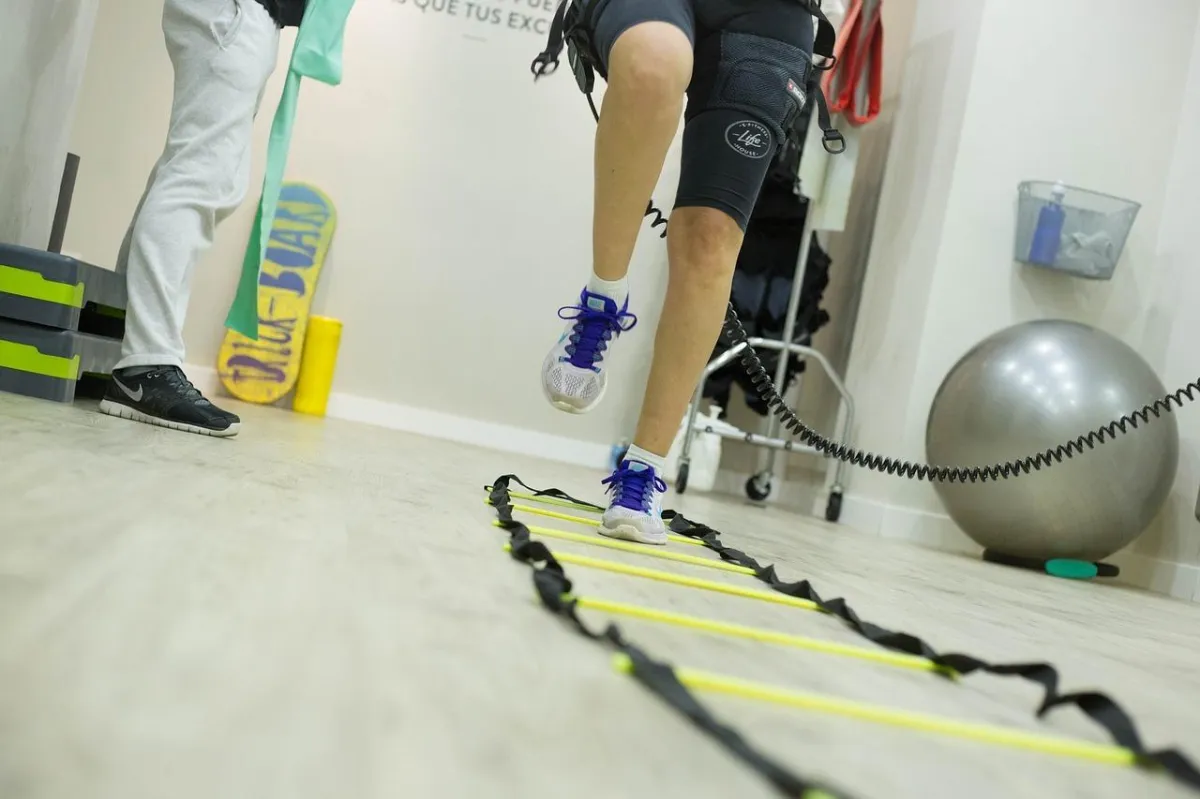


What can physio treat?
Sprains and Strains
Sprains and Strains
Sprains and strains are common injuries that involve damage to the muscles, ligaments, or tendons in the body. A sprain occurs when a ligament is stretched or torn, while a strain involves the stretching or tearing of a muscle or tendon. Both can range from mild to severe and often occur during physical activity or accidents. The symptoms can include pain, swelling, bruising, and difficulty moving the affected area. Common causes of sprains and strains include:
➯ Sudden twists or movements
➯ Overexertion or improper use of muscles
➯ Poor stretching or warm-up before exercise
➯ Falling or tripping· Sports injuries, especially in contact sports
➯ Lifting heavy objects incorrectly
➯ Weak or fatigued muscles
➯ Previous injuries or lack of conditioning
Treatment typically involves rest, ice, compression, and elevation (the R.I.C.E. method) to reduce swelling and pain. For more severe cases, physical therapy, anti-inflammatory medications, and sometimes surgery may be required. Prevention involves regular strengthening exercises, proper warm-up techniques, and being mindful of body mechanics during physical activities. Early diagnosis and proper care can help avoid complications and speed up recovery.
Pelvic Floor Concerns
Pelvic Floor Physiotherapy
Many women suffer from pelvic health issues that they are told cannot be resolved. Luckily for the average woman, that is no longer true! And if you've found us then it looks like you're on the right track to better pelvic health.
While many people are told to do Kegel exercises to help with incontinence, pelvic pain or other issues related to your pelvic floor (see below), they are in fact not always the correct prescribed exercise. In fact, strengthening an already tight pelvic floor can actually make things worse - this is why working with someone trained in pelvic health physiotherapy is so essential.
Weak pelvic floor muscles can be diagnosed by your physiotherapist trained in this specialization. Such issues with weak pelvic floors include:
➯ Stress incontinence
➯ Urge incontinence
➯ Pelvic organ prolapse
Issues related to an overly tight pelvic floor include:
➯ Urinary and fecal urgency
➯ Urge incontinence
➯ Chronic pelvic pain
➯ Pain with intercourse
➯ Vaginismus
Good pelvic floor health can also help prepare you for pregnancy, help you stay healthy and comfortable during pregnancy, and can help you after giving birth as well.
Plantar Fasciitis
Plantar fasciitis is an often-seen, painful inflammation and/or thickening of the plantar fascia, which is the fibrous band of connective tissue (basically a tendon or ligament) on the sole of your foot connecting your heel bone to your toes. Your plantar fascia supports the arch of your foot, and inflammation here is the most common cause of heel pain, not to be confused with heel spurs (which are not usually as painful). It can be a stubborn condition to treat, with unpredictable patterns, and some people spend years suffering without finding the right relief. Luckily, natural medicine can help!
Plantar fasciitis is the result of a repetitive straining of this tissue, sometimes involving tiny tears in the tendon/ligament and degeneration in the collagen making up the fascia, leading to pain and possibly also swelling. Note: because inflammation is not necessarily present in this condition, the use of the word 'itis' is actually incorrect. A more correct term would actually be 'plantar tendonosis'.
Plantar fasciitis usually involves only one foot, develops gradually, and starts to hurt with your first few steps in the morning or after long periods of standing. Potential risk factors for this condition include:
➯ your feet roll inward as you walk (excessive pronation)
➯ you have high arches or flat feet
➯ you have just experienced a sudden increase in activity
➯ you spend a lot of time on hard surfaces
➯ you are overweight
➯ you are between 40 and 60 years of age
➯ you are female
➯ you wear improper footwear
➯ you have overly-tight calf muscles
Your doctor will more than likely ask for an X-ray of your foot to rule out any issues with the bones there, such as a stress fracture. Ruling out the need for a cast or splint, your doctor may suggest rest, icing your heel, taking pain medication, doing some stretches, and possibly even losing some weight and/or getting a new pair of shoes. In severe cases, a steroid injection may even be a recommendation.
Rheumatoid Arthritis
What is rheumatoid arthritis?
Rheumatoid arthritis (RA), which differs from osteoarthritis, is an autoimmune disease that causes inflammation of your organ systems, most likely in your joints. The inflammatory process of RA causes excess synovial fluid and fibrous tissue to develop around the joints, causing destruction of your cartilage and joint tissues and the formation of scar tissue. Severe RA can lead to extreme pain, deformity, and reduced joint mobility. Symptoms vary, but typically affect your fingers, wrists, knees, ankles and toes. RA can start gradually, or may come on suddenly causing flu-like symptoms, and joint pain with stiff, swollen joints. Other symptoms may include pleurisy (chest pain while breathing), dry, burning or itchy eyes, sleep disorders, or numbness and tingling sensations in your hands and/or feet.
The cause of this autoimmune disease is unknown, but may be affected by genetic predisposition, gender (more women are affected than men), infection, and hormonal changes.
While there is no definitive test to determine whether or not you have RA, your doctor can test for the rheumatoid factor, but a negative test does not rule out the disease. Other blood tests may be required, along with potential X-rays and CT scans. Conventional treatment usually involves lifelong medications such as anti-rheumatic and anti-inflammatory drugs, plus recommended physical therapy and education programs. Surgery may be required in severe cases.
Osteoarthritis
What is osteoarthritis?
Osteoarthritis (OA), also known as degenerative joint disease, is more common than and differs from rheumatoid arthritis. OA is caused by aging and wear and tear on your joints that eventually breaks down cartilage. When the cartilage between your bones is reduced, your bones can then rub together, causing pain, swelling and stiffness. You may also experience bone spurs (extra growth of bone) at your joints, and the ligaments and muscles around your joints may weaken. With some, symptoms remain mild and can disappear at times, while others experience a worsening of symptoms with damp, cold weather. Having a job that requires repeated stress on the joints can put you at risk for OA, as can obesity, genetic predisposition, or having a preexisting condition such as a bleeding disorder, another type of arthritis, or a disorder that blocks the blood supply around a joint.
While there are no blood tests that can diagnose OA, X-rays can indicate a loss of joint space and in advanced cases bone spurs and degeneration may also be apparent.
As for conventional treatment, OA can be treated with analgesics and anti-inflammatories, although high-dose, long-term use can damage your liver or kidneys. Corticosteroids can be used, but only in severe cases and for a short time as they can damage cartilage and remove minerals from the bone, further weakening the joint. Artificial joint fluid can be injected into the knees to relieve pain for 3-6 months, and surgery may be recommended for severe cases.
Back, Neck, Joint Pain
Back Pain, Neck Pain, Joint Pain
Back, neck, and joint pain are common issues that can significantly impact daily life. These types of pain can stem from a variety of causes affecting muscles, nerves, bones, and other structures in the body. Some common causes include improper posture, muscle imbalances, stress, degenerative conditions, and injury. In addition to these, conditions such as arthritis, herniated discs, and infections can also contribute to discomfort. The following risk factors are often seen across back, neck, and joint pain:
➯ Arthritis (especially spondylosis or osteoarthritis)
➯ Muscle imbalance (due to inactivity or bed rest)
➯ Obesity
➯ Pregnancy
➯ Osteoporosis
➯ Tumors or infections of the spine or joints
Symptoms can vary greatly, ranging from dull aches and sharp pain to numbness, tingling, weakness, or even difficulty swallowing or breathing. The treatment for these conditions will depend on the underlying cause but may include anti-inflammatory medications, muscle relaxants, physical therapy, or in severe cases, surgery. It’s essential to work closely with your doctor to determine the best course of action, ensuring both short- and long-term relief while avoiding overuse of medications. Regular movement, posture correction, and proper lifting techniques are key to prevention and managing these conditions.
Athletic Injury
What is an athletic injury?
Any injury related to a sport or exercise can be considered an athletic injury. While the sport or exercise is usually fun, the injury that results from an accident or overuse usually is not. The types of accidents that can result from athletic activity include: contusions, sprains, strains, muscle soreness, joint injury, tendon injury, fractures, and dislocations. Overuse injuries can include virtually any type of repetitive strain injury (RSI) such as carpal tunnel syndrome, medial epicondylitis (golfer's elbow) and lateral epicondylitis (tennis elbow). The classifications vary, but the result is often the same: pain and inflammation.
Prevention of an athletic injury should involve:
➯ proper warm-up
➯ rest between activities
➯ proper muscle stretching and strengthening
➯ ceasing activity when there is pain present
Many still recommend immediate treatment of most athletic injuries with the RICE method (a generally agreed upon set of protocols): Rest (to prevent further injury) Ice (within the first 12 hours of injury, and applied in 20 minute intervals) Compress (with an ACE bandage, to limit and reduce swelling) and Elevate (to control swelling). The physician that determined this course of treatment, however, refuted his own theory in 2014, so this approach is (albeit slowly) being reconsidered. See this blog post.
Most of the time you should seek medical attention to determine the severity of your injury as an undiagnosed fracture could have serious consequences. Once a proper diagnosis has been achieved, your doctor may recommend a variety of treatment options (see below for examples).
Sciatica
What is sciatica?
Sciatica refers to a set of symptoms describing pain, weakness, and numbness or tingling in your leg (usually one leg or the other and not both at once). Sciatica is caused by an underlying medical condition rather than being a diagnosis on its own, and is caused by injury or pressure on your sciatic nerve. Your sciatic nerve starts in your lower spine and runs down each leg on the posterior side, into your foot.
Possible causes of injury or pressure on your sciatic nerve include:
➯ herniated spinal disk
➯ piriformis syndrome (a pain disorder involving a muscle in ➯ ➯ your buttocks)
➯ hip injury
➯ tumor
Your sciatica pain can vary from mild to severe, and can manifest as a dull ache, tingling sensation, or a burning sensation, and may accompany some weakness in the affected leg. Your symptoms may be felt as far down the leg as your calf muscle, and possibly even into the sole of your foot.
Your doctor may recommend various forms of treatment, depending on the underlying cause of your sciatica. Where surgery can be ruled out, simple treatment such as the application of heat to the painful area may be suggested, along with bed rest, and possibly some anti-inflammatory medication. Exercise to strengthen the abdominal muscles is usually advised once the pain has dissipated (contact us for some exercises to help prevent sciatica pain).
FREE CONSULTATION
Set up your free, 15-minute consult
How does Physiotherapy work?
During the course of your treatment, your physiotherapist may incorporate massage, joint mobilization, personalized exercise regimens, and any other number of modalities aimed at improving your healing time.
We at Yellow Gazebo feel that hands-on treatment is not only more enjoyable for you, the patient, but is also more effective in producing lasting results.
Pricing
TYPE
INFO
MINUTES
PRICES
Initial Physiotherapy session
In this first session, your thorough medical history will be discussed with your Yellow Gazebo physiotherapist, and then a treatment will follow. Treatment will likely involve hands-on therapy, and potentially some exercise as well.
45
$135.00
Follow-Up Physiotherapy Session
In follow-up sessions, the plan laid out in your initial meeting will be followed, with modifications made as needed. Your Yellow Gazebo physiotherapist will continue to look at your body as a whole, and will recommend a variety of methods of healing.
30
$100.00
30-Minute Physiotherapy Laser Session
Receive laser therapy with a class 4 laser for your health concerns and see results. Our physiotherapist will create a treatment plan with you to suit your needs.
30
$105.00
Pricing
Initial Physiotherapy session
Info:
In this first session, your thorough medical history will be discussed with your Yellow Gazebo physiotherapist, and then a treatment will follow. Treatment will likely involve hands-on therapy, and potentially some exercise as well.
Minutes:
45 m
Price:
$135.00
Follow-Up Physiotherapy Session
Info:
In follow-up sessions, the plan laid out in your initial meeting will be followed, with modifications made as needed. Your Yellow Gazebo physiotherapist will continue to look at your body as a whole, and will recommend a variety of methods of healing.
Minutes:
30 m
Price:
$100.00
30-Minute Physiotherapy Laser
Session
Info:
Receive laser therapy with a class 4 laser for your health concerns and see results. Our physiotherapist will create a treatment plan with you to suit your needs.
Minutes:
30 m
Price:
$105.00
Our Physiotherapy Team

Physiotherapist - Alice Li
(802:MThSa 840:TuW)
Alice completed her master's degree in Physical Therapy at Queen's University and her undergraduate degree in Kinesiology at the University of Waterloo. Since graduating, Alice has successfully completed her Diploma of Advanced Orthopedic and Manipulative Physiotherapy:

Physiotherapist - Dayna Bercovitch
(840 location)
Dayna is a registered physiotherapist with training in pelvic health physiotherapy. She received her Masters of Science in Physical Therapy from the University of Toronto. Prior, Dayna attended Western University and obtained her Honors Bachelors of Arts in Kinesiology and graduated with distinction. Dayna has experience in orthopedic, neurological and more.

Physiotherapist - Jennifer Simic Bogler
(840 location)
Jennifer is a registered physiotherapist who holds a bachelor's degree in kinesiology from York University and a master's degree in physical therapy from the University of Toronto. With training in pelvic floor physiotherapy, and clinical experience that spans inpatient general medicine and trauma units, neurological paediatrics...

Physiotherapist - Yang Liu
(802 location)
Yang completed his studies in Bachelor of Science from Queen's University, and Master of Physiotherapy from University of Sydney in 2017. After graduation, Yang worked as a Physiotherapist in Sydney, Australia. Since early 2020, Yang began practicing in Toronto, helping and empowering people during their rehabilitation journey